
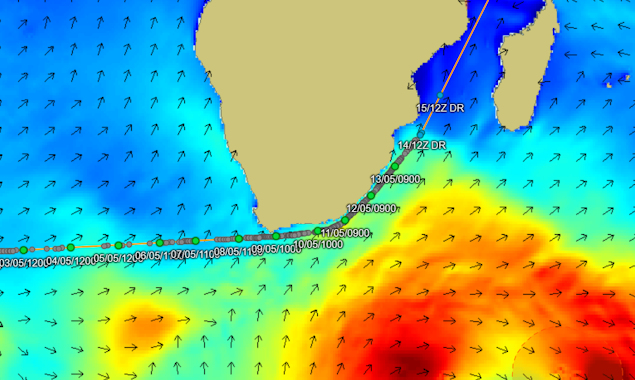
There is a moment before every voyage when the route looks simple. A line is drawn, the port of departure sits behind the vessel, the destination waits ahead, and the sea appears to be a space to cross. But every experienced mariner knows that a voyage is never just a line on a chart. It is a living negotiation between the vessel, the cargo, the weather, the crew, the commercial schedule, the fuel budget and the environmental obligations that now shape modern shipping.
This is where weather routing and voyage optimization become more than operational support. They become a way of protecting time, fuel, safety and performance before risk turns into cost. With more than 20 years of hands-on experience in marine routing, tropical cyclone avoidance and operational assistance, Interoutes approaches every voyage as a dynamic operation rather than a fixed plan. The objective is not simply to reach the next port, but to reach it with the best possible balance between safety, consumption, emissions and reliability.
Weather changes quickly. Pressure systems evolve, sea states build, tropical cyclones intensify, and a route that looked efficient yesterday may no longer serve the vessel tomorrow. At the same time, shipping is operating in a stricter commercial and regulatory environment. Bunker consumption remains one of the most important cost drivers, while emissions performance is increasingly connected to compliance and reputation. The IMO’s Carbon Intensity Indicator became part of the operational reality for ships from 2023, making energy efficiency and voyage planning even more central to day-to-day vessel management.
Interoutes combines marine experience with customized performance modelling and voyage optimization algorithms to support decisions that are practical at sea and measurable ashore. Every route is built around the specific vessel, not around a generic model. The ship’s characteristics, cargo condition, expected performance, weather exposure and operational priorities are assessed before a route is recommended. Through digital ship modelling, the team can simulate how a particular vessel is expected to behave under forecasted conditions and then shape the voyage plan around the real interaction between hull, engine, sea and weather.
The work does not end when the vessel sails. In many ways, that is when the most important part begins. As the voyage progresses, updated plans are issued in line with the vessel’s reported positions, fresh weather data and changing operational conditions. The route is continuously re-evaluated, vessel performance is monitored, and the plan is adjusted whenever the sea demands a better answer. Optimization is not a one-time calculation, but a continuous watchkeeping process.
What makes the service especially valuable is the human layer behind the technology. Mariners do not need abstract data when pressure is rising on board. They need clear guidance, fast interpretation and people who understand what decisions feel like from the bridge. Interoutes places marine experts at the center of the service, available 24 hours a day and seven days a week, monitoring weather, reviewing routing options and supporting both ship and shore teams throughout the voyage.
Through the IRS Nautilus platform, clients can also follow weather routing and voyage planning tools in real time, keeping shore teams connected to the operational picture as it develops. This visibility helps transform routing from a reactive service into a shared decision-making environment, where navigational safety, commercial performance and emissions awareness can move together.
A successful voyage is rarely the result of one perfect decision. It is the result of many informed decisions made at the right time. The shortest route is not always the most economical route, and the fastest route is not always the safest one. True voyage optimization understands that the best route is the one that respects the vessel, protects the cargo, supports the crew, reduces unnecessary fuel burn and keeps the voyage aligned with the realities of weather and regulation.
For Interoutes, weather routing is not only about avoiding bad weather. It is about giving every vessel a clearer, safer and more efficient way forward.